





colortrading.in

Colour Trading Demo, App Access, Tips and Strategy Guides

Explore colour trading with a free demo, clear beginner guidance, app access, and practical strategy content designed for players who want to understand how colour trading works before they play.

Trusted by colour trading players and operators across India 4.9

1 Min
Rounds

Quick results, high engagement
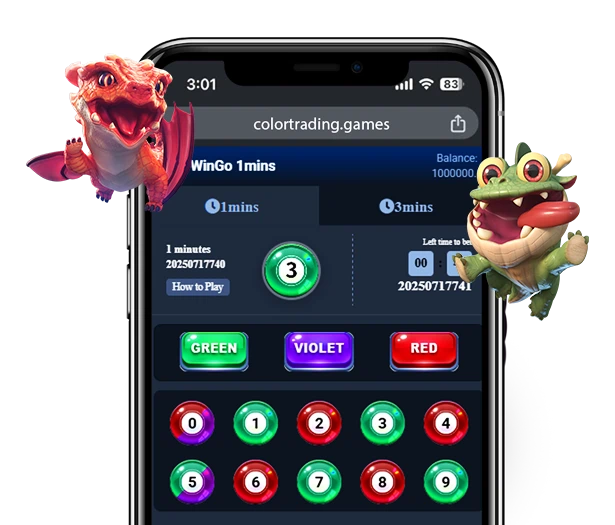
Colour Trading game preview
100% Demo Available
100K+ Players Joined
4.9 Player rating
1 Min Rounds
100% Demo Available
100K+ Players Joined

Everything You Need to Start Colour Trading with More Clarity

Learn the basics of colour trading, test the demo, review strategies, and move between mobile and web with a simpler path from beginner questions to live play.

Free Demo Mode

Try the game before you register or play.

Mobile & Web App

Play on Android, iOS, or web anytime.

Stable & Fair System

Smooth gameplay with reliable results every round.

Colour Trading interface preview

Why Players Use Our Colour Trading Guides and Demo

From colour trading demo access to strategy reading and platform familiarity, the homepage is built to help players compare, learn, and act faster.

Promotions

Promotions

Exclusive offers and rewards available for registered players.

Explore →
Simple Interface

Simple Interface

Clean layout and smooth controls across mobile and web.

Explore →
01

Real Scam Cases in Colour Trading: What Actually Happened

The most common colour trading scam doesn’t start with obvious fraud. It starts with a platform that works — for a while. Players win small amounts, withdrawals go through, and trust builds. Then the amounts get larger, the rules quietly change, and the money stops moving. By the time players realise what happened, the platform has already collected what it needed.


Why Real Cases Matter More Than Warnings

You can read a list of red flags and still dismiss them. It’s easier to take a scam seriously when you can trace exactly how it unfolded — what the platform did, what the player saw, what the money trail looked like.

The cases below aren’t from a single source. They’re patterns that appear repeatedly across Telegram groups, Reddit threads, and player community forums in India. The platforms aren’t named — both for legal reasons and because the names change constantly. The playbook doesn’t.

For a checklist of signs to watch for before these situations unfold, 5 warning signs of scam colour trading apps breaks them down one by one. This article is what those signs look like in real use.


Case 1: The Slow Withdrawal Trap

How it started: A player found a colour prediction platform through a WhatsApp group. The referral came from someone they knew, which lowered their guard. They deposited ₹500, played for two weeks, and grew their balance to ₹2,800. A first withdrawal of ₹1,000 processed in 48 hours. Normal.

What changed: After a second winning streak brought the balance to ₹6,500, the player requested a full withdrawal. This time, the platform asked for a government ID scan. The player submitted it. Three days passed. Then the platform asked for a selfie holding the ID. Then a bank statement. The “verification team” was always “reviewing” the submission. After three weeks and four document submissions, the player’s account was locked for “suspicious activity.”

What the pattern tells us: The first withdrawal processed because it was small enough to maintain trust. The verification wall appeared only when the amount was worth keeping. By the time the account was locked, the platform had collected deposits from hundreds of players running the same cycle.

The signal that was there from the start: No WHOIS history older than four months. No independent community confirmation of large withdrawals. Is colour trading a scam? describes exactly this pattern — legitimate platforms process withdrawals without escalating document requirements.


Case 2: The Rigged Round During Peak Deposit Period

How it started: A platform ran an aggressive promotion — deposit ₹200, get ₹100 bonus, double your first win. New players flooded in. The first few rounds had unusually high win rates — multiple players in forums reported winning 4–5 consecutive rounds in the first session.

What changed: After a week of positive results, players started depositing more seriously. ₹1,000–₹3,000 deposits became common in the group. Then the win rate shifted. Players who had been consistently profitable started losing streaks that felt statistically unlikely — not a few bad rounds, but 15–20 consecutive losses on Big/Small bets. Forum posts started appearing. The platform’s Telegram admin began deleting complaints.

What the pattern tells us: This is known as “seed and harvest” — artificially high win rates during onboarding to encourage larger deposits, followed by a reversion that extracts the inflated balances. The platform doesn’t need to manipulate every round — it only needs to shift the parameters during the period when average bet sizes are highest.

Why this is hard to prove: Random variance can explain losing streaks. That’s exactly why this tactic works — the player can’t definitively prove manipulation, only observe that the outcome distribution shifted after they deposited more.


Case 3: The Disappeared Platform

How it started: A colour trading platform had been operating for about five months. It had a polished interface, an active Telegram community of around 12,000 members, and consistent payout reports from early users. Players trusted it because other players did.

What happened: Over a single weekend, the platform’s website went offline. The Telegram group was deleted. The customer support email bounced. Players with pending withdrawals totalling anywhere from ₹800 to ₹15,000 had no recourse — no company name, no registered address, no payment processor to dispute through.

Total estimated loss across the community: Based on forum posts, estimated at ₹40–60 lakhs across the active player base at the time of disappearance.

The signal that was there from the start: WHOIS lookup showed domain registered five months prior — under the threshold that should have triggered caution. The Telegram group had grown unusually fast, a common indicator of paid membership inflation. No forum outside the platform’s own community had independently confirmed large withdrawals.


Case 4: The Fake APK That Wasn’t Just a Scam App

How it started: A player searched for a popular colour trading app on Google and found a download link in a sponsored blog post. The APK looked identical to the official app — same logo, same interface, same onboarding flow.

What changed: After playing for a few days, the player noticed unusual data usage from the app. A tech-savvy friend checked the APK’s permissions — it had requested access to contacts, SMS, call logs, and stored files. Standard colour trading apps require none of these.

What the APK was actually doing: The app was functioning as a game surface on top of credential harvesting code. When the player entered their UPI PIN to “add funds,” that data was being captured. The player caught it before serious financial damage — many don’t.

Why this matters beyond the game: Scam colour trading APKs aren’t always trying to steal your game balance. Some are designed to access banking credentials or personal data. The game is the hook; the actual objective is broader.

The protection: Only install apps from the official Play Store listing, directly from the platform’s verified website with a domain history check, or not at all until you’ve verified the platform through independent community reviews.


What These Cases Have in Common

Four different situations. Four different mechanics. One consistent structure:

  1. Trust is built first — through early wins, referrals, or community size
  2. Deposits scale up — the player invests more as confidence grows
  3. The extraction point arrives — withdrawal friction, manipulation, disappearance, or data theft
  4. Recourse is minimal — no registered entity, no payment dispute, no platform accountability

The protection against all four patterns comes down to the same checks: WHOIS the domain before depositing, confirm withdrawals in independent communities, and never install APKs from unverified sources.

A platform that has been running for two or more years, with verifiable withdrawal history from real community members, is a fundamentally different risk profile than one that appeared last quarter.


One More Thing Worth Saying

None of these cases required particularly sophisticated fraud. They worked because players trusted quickly and verified slowly — or didn’t verify at all.

The game itself isn’t the problem. Colour prediction has legitimate platforms that operate transparently and process withdrawals without drama. The problem is that the format’s simplicity and the promise of fast returns make it unusually easy for bad actors to build convincing imitations.

Check the platform. Then play. In that order.


Disclaimer: Colour Trading is a game of chance. The cases described in this article are based on patterns reported across player communities and forums — specific platform names have been omitted to avoid legal complications. This content is for informational purposes only and does not constitute legal or financial advice. Play responsibly and within your limits.


Frequently Asked Questions

How do real colour trading scams typically start?

Most scams begin with a period of genuine payouts — small withdrawals that process normally to build trust. The fraud only activates once deposits reach a level worth keeping, usually through escalating withdrawal requirements or account locks.

Can a colour trading platform manipulate game results?

Unregulated platforms with no independent auditing can theoretically alter their outcome parameters. This is why the platform’s verifiable history and community-confirmed withdrawal record matters more than how the game feels during early sessions.

What should I do if a colour trading platform refuses my withdrawal?

Document every communication in screenshots. File a complaint with the platform’s payment processor if you paid by UPI or card — some disputes can be reversed at the bank level. Report the platform in independent community forums to warn other players. Avoid sending additional “fee” payments to unlock withdrawals — this is a secondary extraction tactic.

Are all colour trading platforms scams?

No. Legitimate platforms with verifiable operating history, transparent payout structures, and independent community confirmation of successful withdrawals do exist. The distinction between a scam and a legitimate platform is almost always visible in a basic WHOIS check and a search for withdrawal experiences in independent forums.


Start with Colour Trading Demo, Guides, and App Access

Use the demo to understand colour trading rounds, explore strategy pages, and move to the app when you are ready for a faster playing experience.

Register & Get ₹99 Bonus